Most homes burn from embers,
not from the flame front.
That single fact reorders everything about protecting a house. Post-fire investigations repeatedly find homes standing in a burned landscape and homes destroyed while the trees around them survived. The difference is usually what was within five feet of the wall.
The ember-resistant band. The highest-value work you will ever do.
Lean, clean and green. Break up continuous fuel.
Reduce fuel so fire drops from the crowns to the ground.
Roof, vents, eaves, windows, decks.
Dated photos and invoices, or it did not happen.
Unfamiliar terms are defined in the glossary.
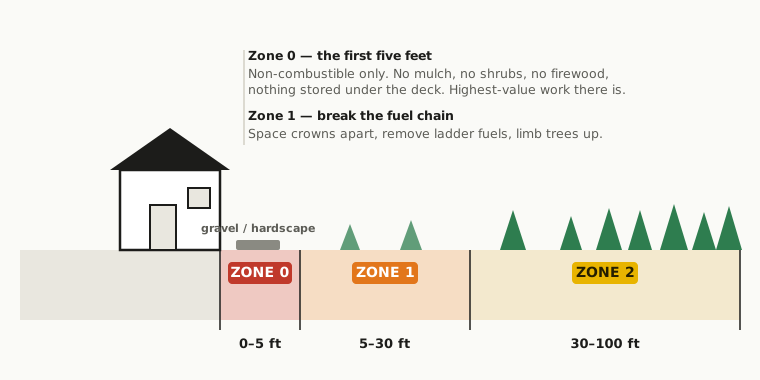
Zone 0: the first five feet
Everything inside five feet of the exterior wall should be non-combustible. Not fire-resistant — non-combustible. Gravel, concrete, bare mineral soil, hardscape. This is the band where wind-driven embers land, collect and smoulder against siding until something catches.
What comes out: bark mulch, juniper and other resinous shrubs, firewood stacks, plastic planters, doormats, patio furniture cushions, and anything stored under a deck. What stays out: the green waste bin, the recycling, and the gas can.
Gutters and roof valleys belong to this zone too. Accumulated needles on a roof are the most common ignition point on an otherwise defensible property, and they refill every season.
Zone 1: five to thirty feet
The aim is discontinuity. Fire moves through connected fuel, so you are breaking the chain horizontally and vertically. Space tree crowns apart, remove ladder fuels — the shrubs under trees that let a ground fire climb — and limb trees up six to ten feet where the tree can take it.
Keep grass short and irrigated where you can. Move the woodpile at least thirty feet from the house, and do not park a vehicle where a fuel tank sits against the structure.
Zone 2: thirty to a hundred feet
Here you are not clearing, you are thinning. Reduce the fuel load enough that a crown fire drops to the ground before it reaches Zone 1, which is what gives firefighters somewhere to stand. Remove dead and downed material, thin dense stands, and keep the spacing wider on slopes because fire travels uphill faster.
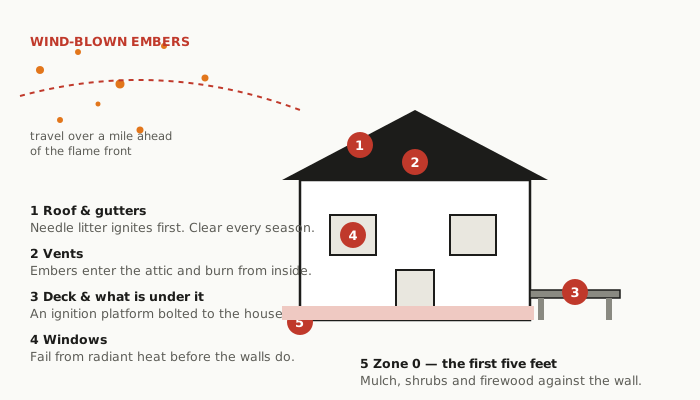
Home hardening: the four that matter most
| Upgrade | Why it matters | Relative cost |
|---|---|---|
| Class A fire-rated roof | The single largest surface exposed to ember fall. A wood shake roof in fire country is the definition of an uninsurable feature. | High |
| Ember-resistant vents | Embers enter attics and crawlspaces through vents and ignite the house from inside. 1/8-inch metal mesh at minimum; listed ember-resistant vents are better. | Low |
| Dual-pane tempered glass | Windows fail from radiant heat before the structure does, opening the interior to embers. | Medium |
| Enclosed eaves and non-combustible siding | Open eaves trap rising embers. Six inches of non-combustible material at the base of the wall handles ground contact. | Medium to high |
Decks deserve a separate mention. An attached wooden deck is an ignition platform bolted to your house, and what is stored underneath it is usually worse than the deck itself.
Grants and cost share
Mitigation is expensive and a fair amount of it is subsidised. Look in three places: your state forestry or fire agency, which usually runs a cost-share programme; your county or fire protection district, which often funds chipping days and free defensible space assessments; and your state tax code, since several states now offer a credit for qualifying mitigation spend.
Community programmes matter as well. A Firewise USA recognition covers the whole neighbourhood, and some carriers credit it, which is worth more than any individual parcel improvement you can make alone.
Where to start if you only do one thing
Clear Zone 0 completely, then screen the vents. Between them they address the two mechanisms that destroy the most homes, they are the cheapest items on the list, and you can finish both in a weekend.
Requirements vary by state, county and fire protection district, and several jurisdictions have their own legally binding defensible space standards. Confirm specifics with your local fire authority before you rely on anything here.